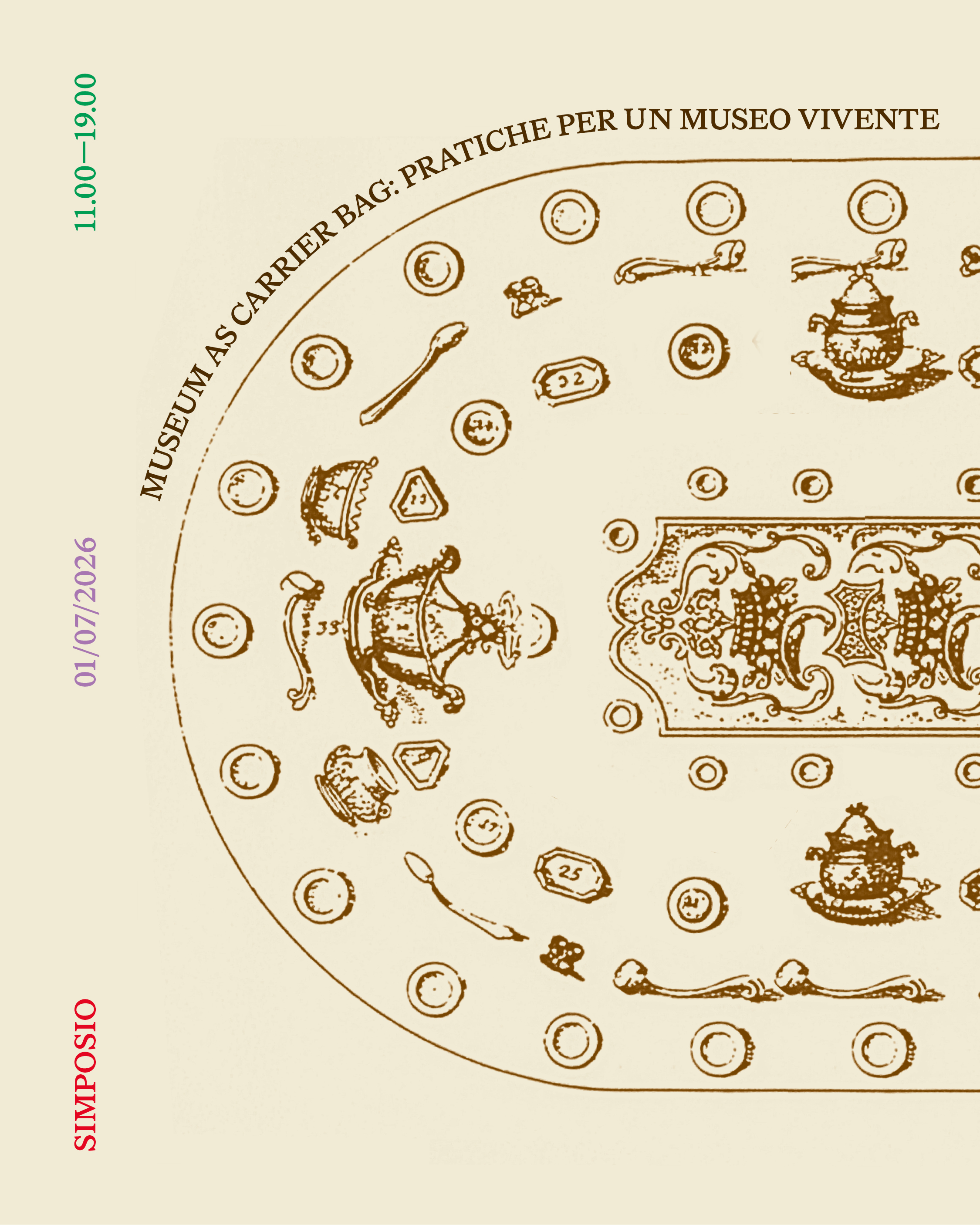
01/07/2026, 11.00 AM — 07.00 PM
Museum as Carrier Bag: Practices for a Living Museum
Lisa Andreani
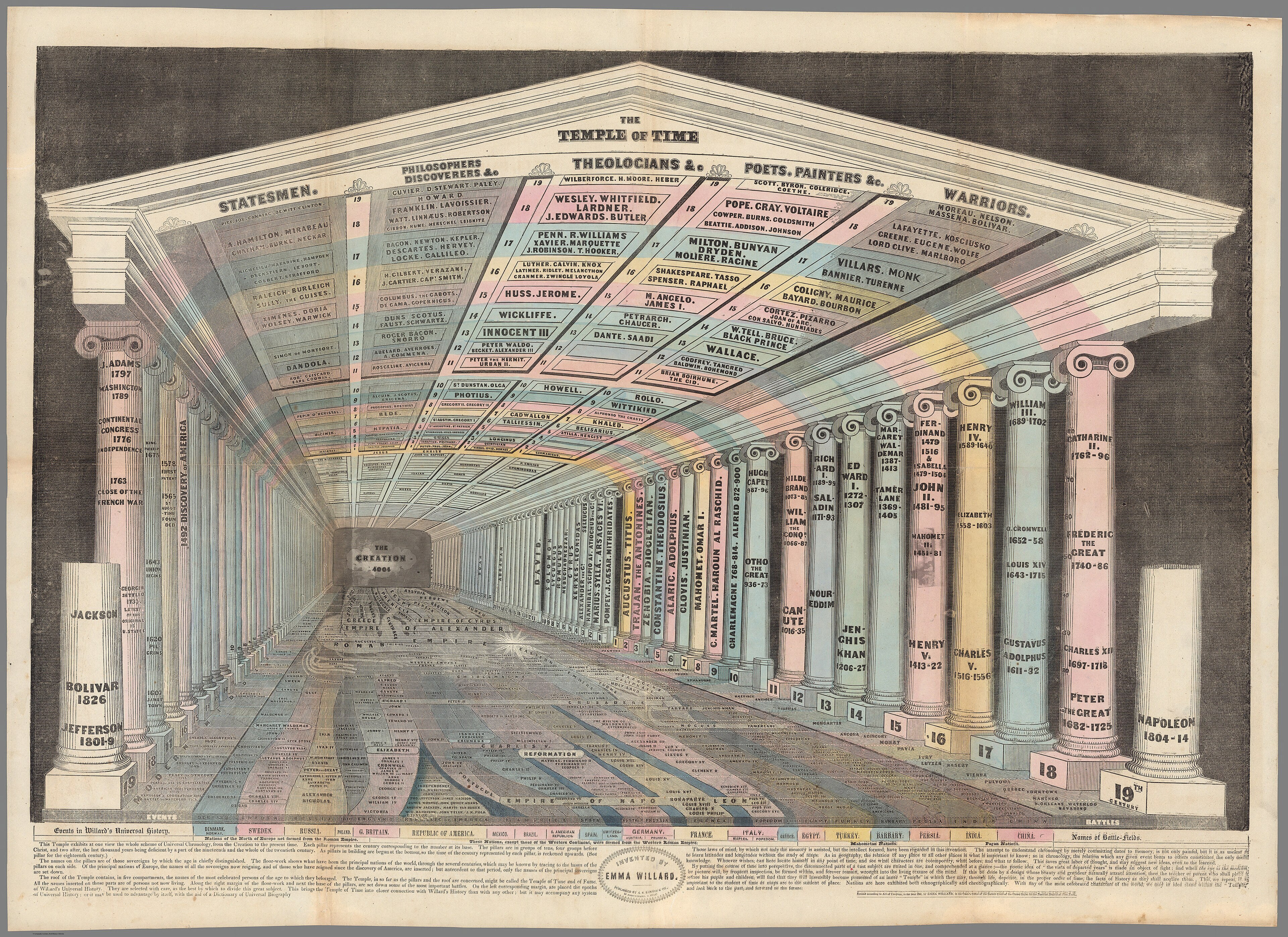
01/07/2026, 11.00 AM — 07.00 PM
Crossings
Caterina Rossato
01/07/2026, 11.00 AM — 07.00 PM
Game
Macerated
CROSSINGS
CATERINA ROSSATO
Throughout the Day | Across the Museum
Crossings is an intervention on the floor of the exhibition space that transforms it from a mere passageway into an active support for a semiotic device capable of suspending and merging multiple modes of knowledge. The work inhabits a zone of expressive potential between the architectural plan (as a rigid physical container), the mental map (as a fluid network of associations), the exploded view of a memory palace (as a stratification of images and places to be remembered), and the page of a notebook (as a fragmentary, subjective, and processual trace). Walking thus becomes an interpretative act. As visitors move through the space, they do more than travel from one point to another: they gradually activate a multilayered process of awareness. The first level is perceptual and bodily (the step encountering signs, thresholds, interruptions, or material continuities). The second is cognitive and mnemonic (each element of the floor may trigger a memory, a relation, or a visual note). The third is reflective and meta-spatial (the awareness that space itself is a mental construction, and that the floor is its living diagram). The work invites a slow and participatory drift in which looking down is not a secondary gesture but the key to navigating a labyrinth of meanings—between inside and outside, project and memory, geometric order and thought in the making.
PRACTICES OF RELATION, PROBLEMS OF CLASSIFICATION
with the Cultural Mediation Team (Moa Ferreira, Valentina Holguin, Elena Teresa Martini, Gianna Rubini, Aurora Sotgiu, Alyssa Sumague)
Who is the cultural mediator? The answer often escapes definition: they are neither a guide, nor a teacher, nor a custodian. Yet this figure constantly inhabits the spaces in between—between artworks and visitors, institutions and their publics, knowledge and experience. Throughout the symposium, the cultural mediators of Scuola Piccola Zattere, in dialogue with Caterina Rossato’s contribution, will activate a distributed presence that embraces this indeterminacy as a working method. Through their interventions, they will approach mediation not as the transmission of content, but as the construction of relationships and possibilities for encounter.
CATERINA ROSSATO
Caterina Rossato (1980, Lecco, Italy) lives and works between Bassano del Grappa and Venice. Her recent research emerges from a systematic process of cataloguing reality—a place, a story, a relationship—leading to the construction of an archive composed of images. This archive is returned in the form of absolute images that contain it entirely while reconfiguring it through a potentially infinite series of variables. These images function as ephemeral placeholders: they emerge and immediately disperse, entrusting the gaze with the task of continual reactivation. Rossato studied at the Accademia Carrara di Belle Arti in Bergamo (BA in Contemporary Artistic Research, 2007) and at Università Iuav di Venezia (MA in Visual Arts, 2011; M-IA, Master in Interactive Arts for Architecture, Performing and Visual Arts, 2015), where she is currently a PhD candidate in Visual Art, Performing Arts and Fashion Studies. In 2009–2010 she was awarded a studio residency at Fondazione Bevilacqua La Masa in Venice, and in 2009 she was artist-in-residence at Fondazione Spinola Banna per l’Arte in Poirino, under the mentorship of Luca Vitone. Between 2008 and 2010 she participated in the Visual Arts Laboratories at Università Iuav di Venezia with Antoni Muntadas, Maja Bajevic, Cesare Pietroiusti, Benjamin Weil, and Angela Vettese. Her exhibitions include Kunsthaus Paradiso (curated by Caroline Corbetta, Palazzo Monti Querini, Venice, 2026), PLACE HOLDER, Edition #17 (BBDB Studio, Bassano del Grappa, 2025), Un’idea brillante (curated by Francesco Urbano Ragazzi, Frise Künstlerhaus, Hamburg, 2014), BYTS ’s-Hertogenbosch (curated by Monique Verhulst, Stedelijk Museum, 2011), Street Geography (Padua, 2018), and Walking Arte in Cammino (Tolmezzo, 2016). She worked at Università Iuav di Venezia as Teaching Assistant to Alberto Garutti (2010–2020), Jacopo Miliani (2022–2023), and Diego Tonus (2023–2026), and as Educational Tutor for pedagogical innovation (2024–2025). She is currently curator of the archive of Fondazione Spinola Banna per l’Arte, dedicated to forms of transmission within artistic practice. Early in her career, she assisted artists Nan Goldin, Pascale Marthine Tayou, and Quayola.