01/05 — 31/07/2026
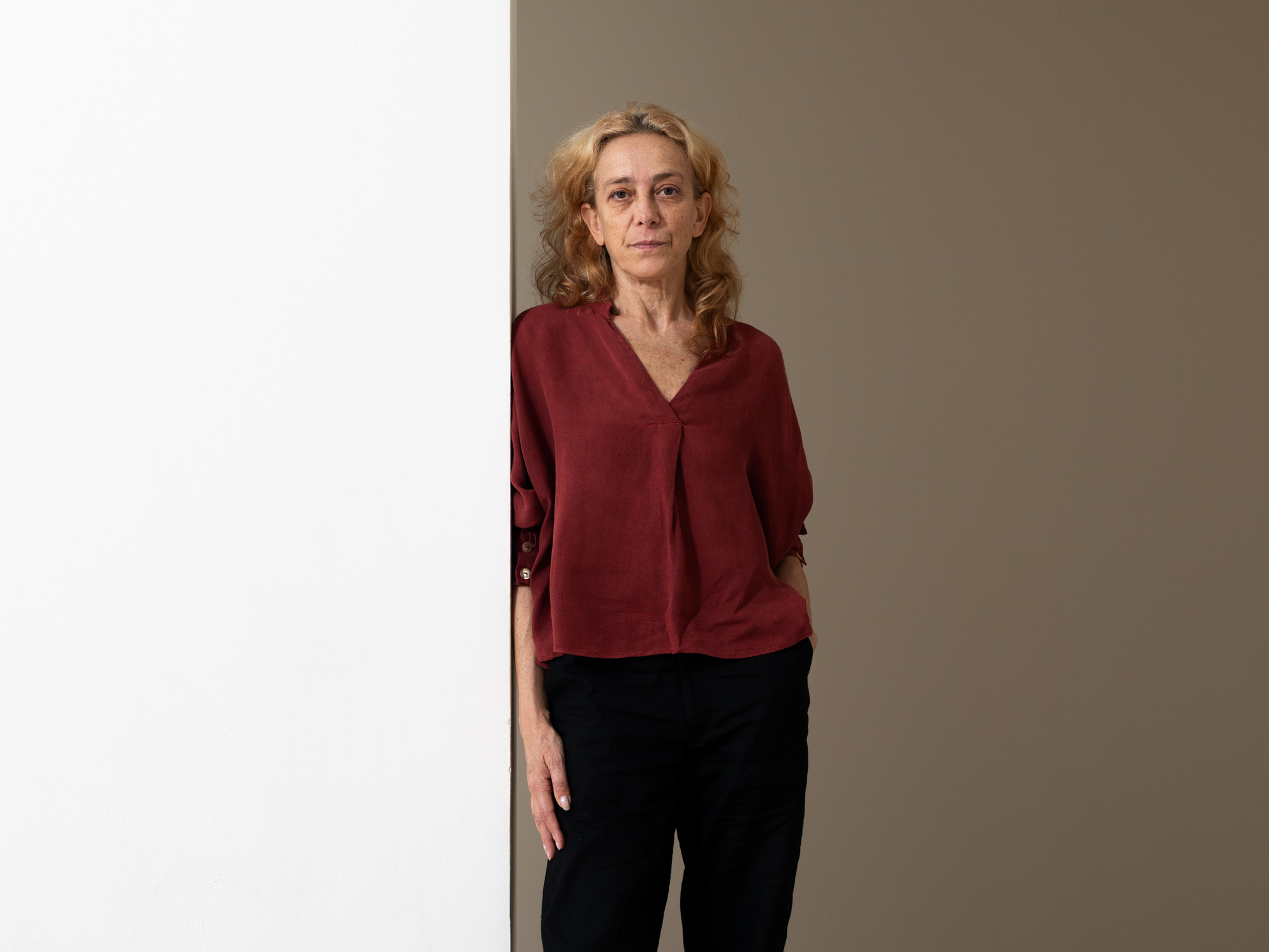
Cristina Kristal Rizzo
01/05 — 31/07/2026
Residency
Cristina Kristal Rizzo is a choreographer and researcher working across dance, performance, and visual arts. She conceives choreography as an open field of relationships and embodied knowledge, drawing on references that range from ballet to somatic and rhythmic practices. Her works take shape as ecosystems—processes in which movement emerges from specific body technologies, following an economy of grace that privileges presence over representation.
For the project at Scuola Piccola Zattere, she collaborates with Lucia Amara, a scholar of performative languages, writer, and researcher with whom she has developed Loveeee since 2010, an exhibition format centered on the concept of grace. Within the research process, Lucia Amara’s role is to propose criteria for cataloguing, to engage with a non-orthodox form of documentation, and to trace connections between objects and concepts. In this sense, the artist archive can situate Cristina Kristal Rizzo within a specific evolution of performativity from the 1990s to the present, while at the same time recognizing the singularity of her aesthetic approach.
During the research residency, the existing archive of her choreographic work is reopened and addressed as a living organism situated in the present. The activation of the archive takes the form of a collective process of transmission, organized through a series of encounters capable of welcoming a polyphony of voices and forms of knowledge: practice workshops, lectures, writing sessions, assemblies—investigating a form that connects practice, critical thought, and the contexts of contemporary performance. At the core of this research lies the idea of grace, emerging from the need to imagine new modes of production and to activate a dispositif grounded in unconditional hospitality, beginning with the etymological link between “grace” and “gratuitousness” or “the freely given.”
BIO
CRISTINA KRISTAL RIZZO
Cristina Kristal Rizzo is a dancer, performer, and choreographer based in Florence, active within the performing arts scene since the early 1990s. She is one of the founders of the historic collective Kinkaleri, with whom she collaborated extensively, engaging with the contemporary international choreographic landscape and receiving numerous awards, including the Premio Ubu and the Premio Lo Straniero. Since 2008, she has pursued an independent path in choreographic production, directing her research toward a theoretically driven and dynamically impactful reflection aimed at regenerating the very act of creation and opening new questions about the present. Today, as one of the leading figures in Italian choreography, her work is regularly presented in international contexts devoted to contemporary dance, performance, and interdisciplinary research in the contemporary arts. Alongside touring, she maintains an intense practice of ongoing training, lectures, workshops, and theoretical writing. Among her recent creations are the projects Monumentum the second sleep, ECHOES, TOCCARE the white dance (winner of the Danza&Danza Award for contemporary choreography in 2020), ULTRAS sleeping dances, VN Serenade, Prélude, ikea, and BoleroEffect. As a guest choreographer, she has created works for major opera houses and institutions in Italy and abroad, including Teatro Comunale di Firenze – Maggio Musicale Fiorentino, Aterballetto, Balletto di Toscana Junior, LAC Lugano Arte e Cultura, MACRO, Museion, Centro per l'Arte Contemporanea Luigi Pecci, Museo Novecento, and MASI Lugano. She contributed to the creation of the special project La Piattaforma della Danza Balinese for the Santarcangelo Festival in 2014 and 2015, and to the 2021 edition of Live Arts Week with Xing. Since 2019, she has actively participated in Sup de Sub, a project involving young non-professionals from the suburbs of Marseille and Paris. In October 2021, she was a guest artist for the project Juntarte / La Escena Inclusiva in Havana and curated the project Cuba>>Firenze 2032 for the Fabbrica Europa Festival. Her work is supported and produced by Fuorimargine Centro di Produzione di Danza e Arti Performative della Sardegna, and she is currently artist-in-residence at PARC / Fondazione Fabbrica Europa for the 2025–2027 period.
LUCIA AMARA
After completing a two-year program in Archaeology at the University of Catania, Lucia Amara earned a degree in Classical Literature in Florence with a thesis on the critique of democracy. During this stage of her education, she attended the Balletto di Toscana school and the École Internationale Rosella Hightower in Cannes. She later studied between Bologna (DAMS) and Paris (Paris VII, Department of Semiology, and EHESS), directing her research toward vocality, performance, and certain irregular forms of literary language through the work of Antonin Artaud, Fernand Deligny, Michel de Certeau, Louis Wolfson, and Jean Starobinski. She carried out research on vocal archives at the Scuola Normale Superiore in Pisa and worked on an unpublished manuscript by Benveniste on blasphemy within a research project at La Sapienza University of Rome focused on mysticism and language. Alongside her theoretical and essayistic work, and her experience as a critic and educator (Xing in Bologna, and Scuola Cònia directed by Claudia Castellucci in Cesena), Lucia Amara has developed a dramaturgical practice in dialogue with theatre and dance artists including Kinkaleri, Cristina Rizzo, Chiara Guidi, Romeo Castellucci, and Gloria Dorliguzzo. She has published Teatro Infantile. L’arte scenica davanti agli occhi di un bambino (with Chiara Guidi, Sossella Editore, 2019) and Utopie Vocali (Mimesis, 2015). She edited the Italian edition of Artaud’s Cahiers, Questo corpo è un uomo. Quaderni 1945–1948 (Neri Pozza, 2025), and for Cronopio, Letura d’Eprahi. Il libro perduto di Antonin Artaud.